
Ernst Kummer
German mathematician who advanced number theory and geometry.

via Wikipedia: Ernst Kummer · see source
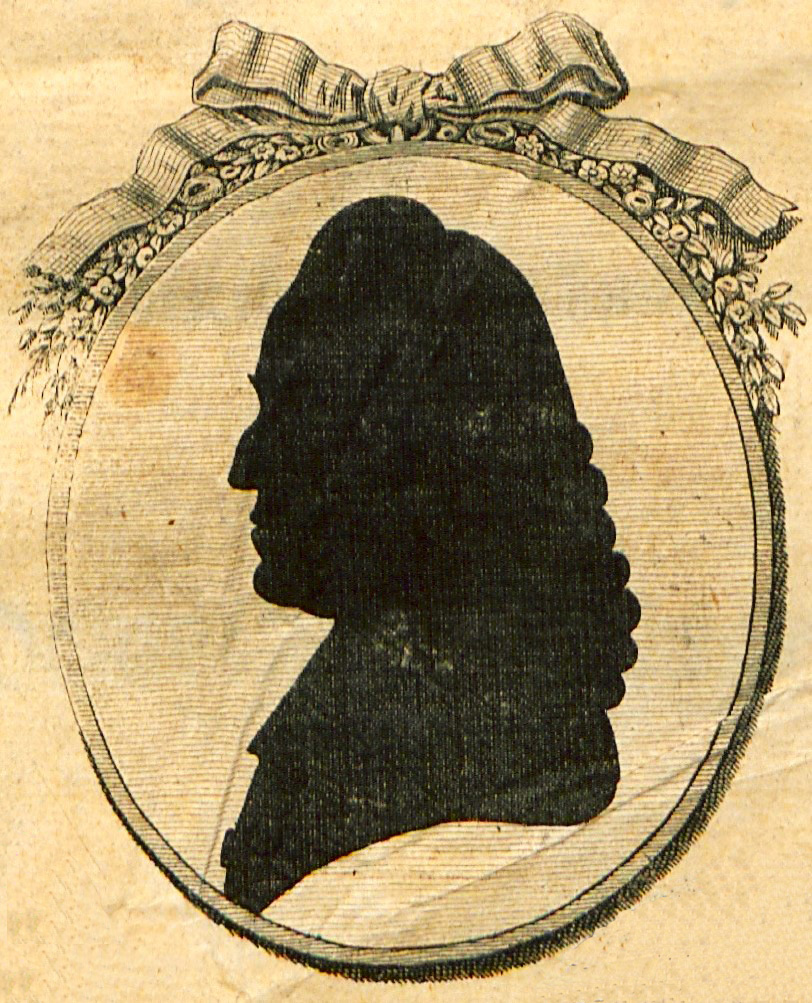
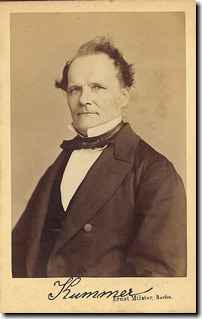
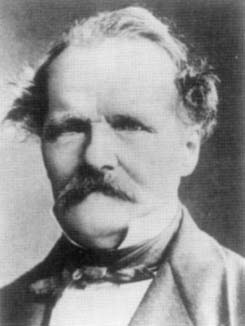
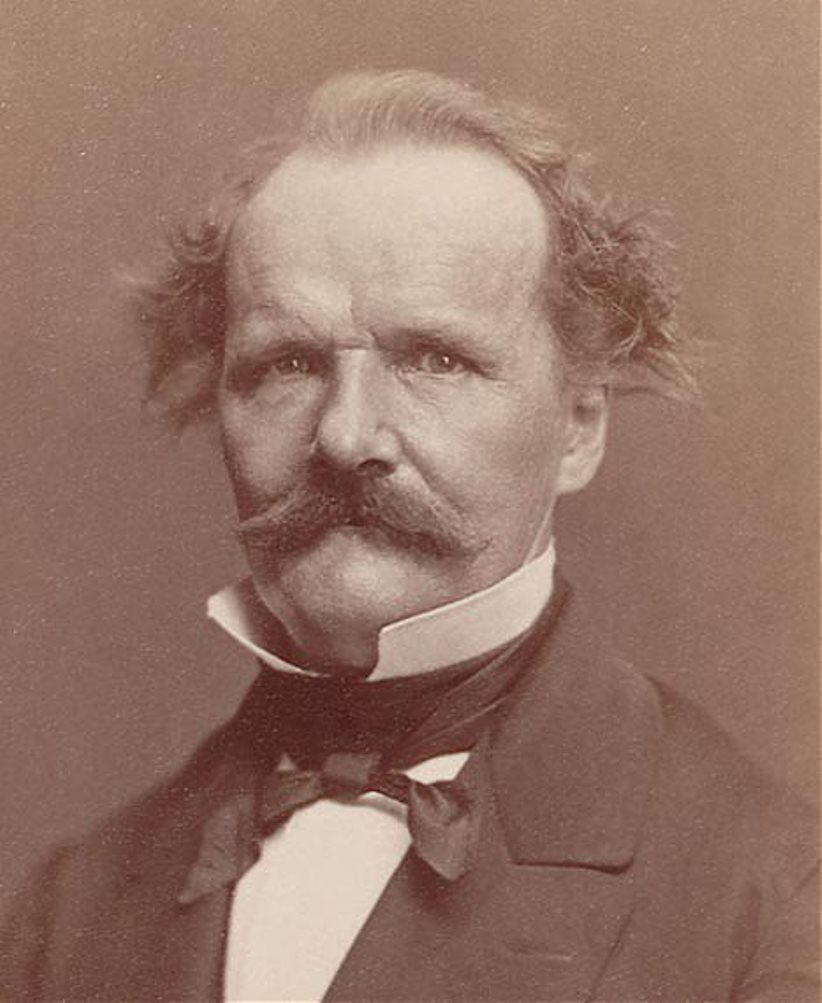
Ernst Eduard Kummer (German: [ˈkʊmɐ]; 29 January 1810 – 14 May 1893) was a German mathematician. Skilled in applied mathematics, Kummer trained German army officers in ballistics; afterwards, he taught for 10 years in a gymnasium, the German equivalent of high school, where he inspired the mathematical career of Leopold Kronecker.
- born
- 29 January 1810
- died
- 14 May 1893
- field
- Mathematics
- nationality
- German
- known_for
- Kummer surface, regular primes, ideal numbers, Kummer extensions, contiguity rel
Verified Timeline
Lore & Background
Kummer was born in Sorau, Brandenburg (then part of Prussia). His father, a physician, died in 1813. He initially pursued Protestant theology but later studied mathematics and was awarded a PhD from the University of Halle in 1831 for writing a prize-winning mathematical essay (De cosinuum et sinuum potestatibus secundum cosinus et sinus arcuum multiplicium evolvendis), which was published a year later. In 1840, Kummer married Ottilie Mendelssohn, daughter of Nathan Mendelssohn and Henriette Itzig. Ottilie was a cousin of Felix Mendelssohn and his sister Rebecca Mendelssohn Bartholdy, the wife of the mathematician Peter Gustav Lejeune Dirichlet. His second wife (whom he married soon after the death of Ottilie in 1848), Bertha Cauer, was a maternal cousin of Ottilie. Overall, he had 13 children. His daughter Marie married the mathematician Hermann Schwarz. Kummer retired from teaching and from mathematics in 1890 and died three years later in Berlin.
Reader's Guide
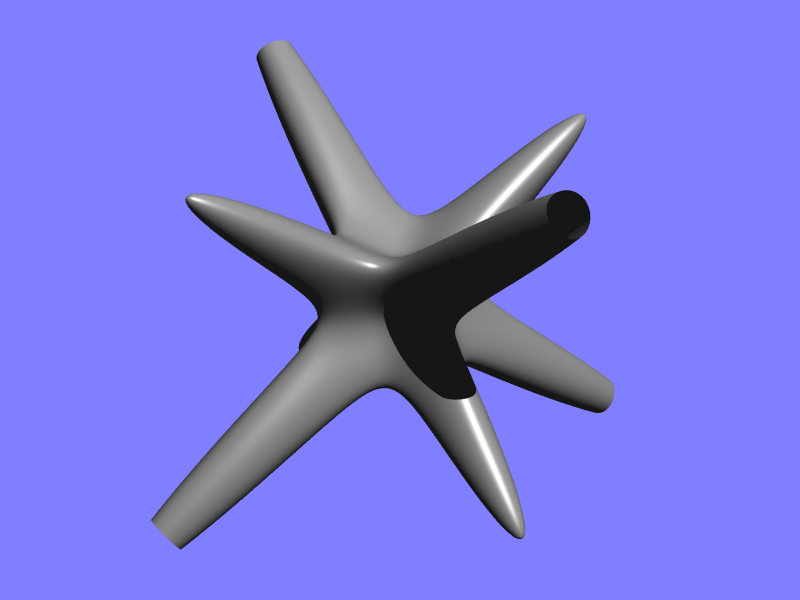
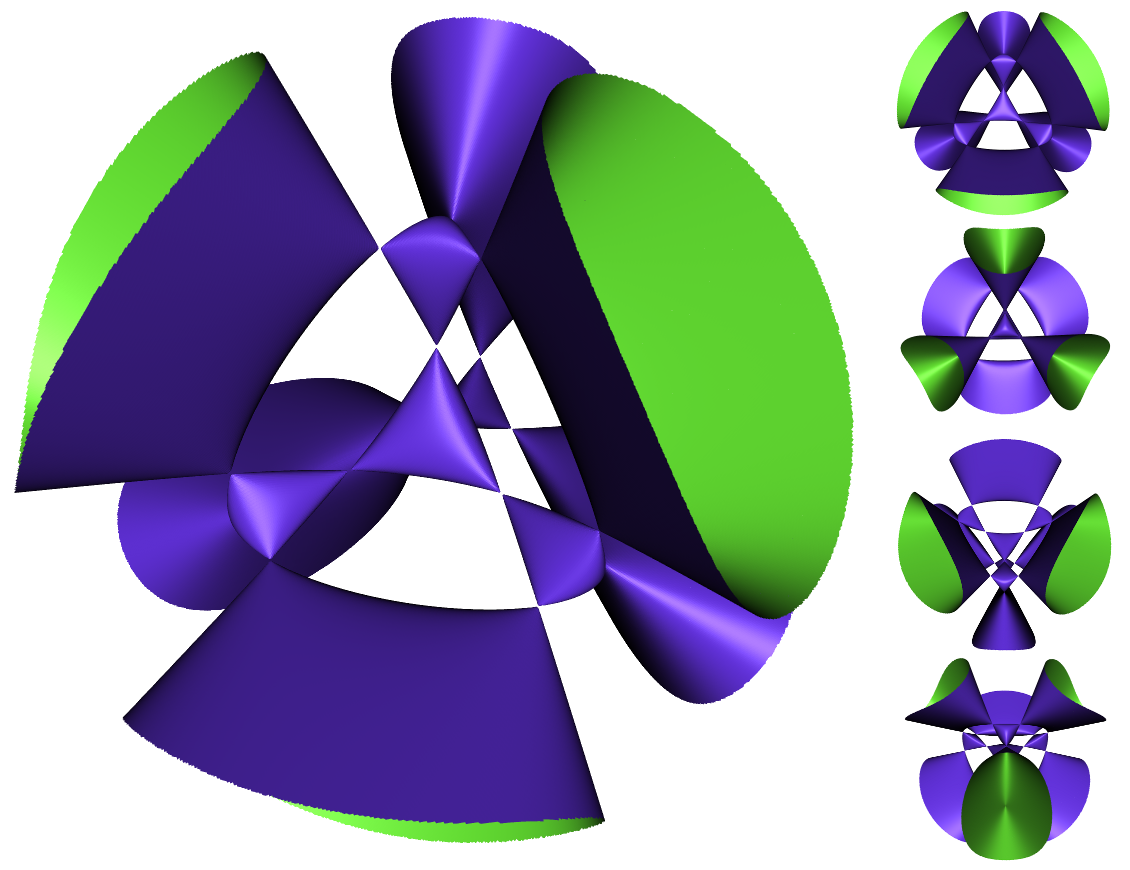
Kummer made several contributions to mathematics in different areas; he codified some of the relations between different hypergeometric series, known as contiguity relations. The Kummer surface results from taking the quotient of a two-dimensional abelian variety by the cyclic group {1, −1} (an early orbifold: it has 16 singular points, and its geometry was intensively studied in the nineteenth century). Kummer also proved Fermat's Last Theorem for a considerable class of prime exponents (see regular prime, ideal class group). His methods were closer, perhaps, to p-adic ones than to ideal theory as understood later, though the term 'ideal' was invented by Kummer. He studied what were later called Kummer extensions of fields: that is, extensions generated by adjoining an nth root to a field already containing a primitive nth root of unity. This is a significant extension of the theory of quadratic extensions, and the genus theory of quadratic forms (linked to the 2-torsion of the class group). As such, it is still foundational for class field theory. Kummer further conducted research in ballistics and, jointly with William Rowan Hamilton he investigated ray systems.
Did You Know?
- Kummer trained German army officers in ballistics before teaching at a gymnasium.
- He was awarded a PhD from the University of Halle in 1831 for a prize-winning essay on powers of cosines and sines.
- His first wife, Ottilie Mendelssohn, was a cousin of composer Felix Mendelssohn.
- Kummer had 13 children; his daughter Marie married mathematician Hermann Schwarz.
- He invented the term 'ideal' in mathematics, which later influenced ideal theory.
Early Life and the Turn from Theology to Mathematics
Ernst Eduard Kummer entered the world on 29 January 1810 in the small Prussian town of Sorau, in the province of Brandenburg. His father, a local physician, passed away in 1813, leaving a young boy to navigate a world of shifting Prussian politics. Kummer's early intellectual path pointed toward the church: he initially enrolled to study Protestant theology. Yet something in the structure of mathematics called to him more powerfully than scripture, and he redirected his studies toward the mathematical sciences. That pivot proved decisive. In 1831, at the University of Halle, he earned his doctorate on the strength of a prize-winning essay whose Latin title—De cosinuum et sinuum potestatibus secundum cosinus et sinus arcuum multiplicium evolvendis—announced a deep investigation into the expansion of powers of cosine and sine through multiple-angle formulas. The work was published the following year, and it signaled the arrival of a mind that would go on to reshape several branches of pure mathematics.
A Mathematician's Breadth: From Surfaces to Fermat
Kummer's research spanned an unusual breadth for the nineteenth century. In the theory of special functions he systematized the web of contiguity relations linking different hypergeometric series, giving analysts a coherent map of how these objects interconnect. In algebraic geometry he introduced what is now called the Kummer surface: the quotient of a two-dimensional abelian variety by the two-element group {1, −1}. This construction produced an early example of what we would today call an orbifold, carrying sixteen singular points that attracted intense geometric study throughout the latter half of the century. Perhaps his most celebrated achievement in number theory was proving Fermat's Last Theorem for a large family of prime exponents—those now termed regular primes. His techniques leaned closer to what we recognize as p-adic methods than to the ideal theory later formalized, even though Kummer himself coined the very word "ideal." He also developed the theory of Kummer extensions—fields built by adjoining an nth root to a base field already containing a primitive nth root of unity—which extended quadratic extension theory and genus theory and remains foundational for modern class field theory. Beyond pure mathematics, he investigated ballistics and, together with William Rowan Hamilton, studied ray systems.
A Life Woven into the Mathematical Family of Berlin
Kummer's personal life was deeply intertwined with the great mathematical and musical families of nineteenth-century Germany. In 1840 he married Ottilie Mendelssohn, daughter of Nathan Mendelssohn and Henriette Itzig. The connection placed him within the extended circle of Felix Mendelssohn and, more significantly for mathematics, made him a cousin of Rebecca Mendelssohn Bartholdy, the wife of Peter Gustav Lejeune Dirichlet. Ottilie's death in 1848 was a profound loss, and Kummer soon remarried Bertha Cauer, who was herself a maternal cousin of Ottilie. Across both marriages he fathered thirteen children. The family web continued to produce mathematical talent: his daughter Marie went on to marry the geometer Hermann Schwarz. Kummer retired from both teaching and active research in 1890, and three years later, on 14 May 1893, he died in Berlin. His life thus bookended an era in which German mathematics was becoming the world's center, and his family connections ensured that his influence radiated well beyond his own publications.
From Ballistics to the Gymnasium: Career and Lasting Legacy
Before his pure-mathematics career fully took shape, Kummer put his quantitative skills to practical use, training officers of the German army in the mathematics of ballistics. He then spent a decade teaching in a gymnasium—the German equivalent of a secondary school—where his most famous student was the young Leopold Kronecker, whose own towering career in algebra and number theory Kummer helped ignite. He retired from both the classroom and active research in 1890 and passed away in Berlin in 1893. Yet his name has outlived him in ways that few mathematicians can claim. An asteroid, 25628 Kummer, orbits the sun in his honor. His collected papers, spanning number theory, function theory, geometry, and miscellaneous topics, were edited by André Weil and published in two volumes by Springer-Verlag in 1975. The list of concepts bearing his name—Kummer's theorem on prime-power divisors of binomial coefficients, Kummer's congruence, Kummer theory, the Kummer–Vandiver conjecture, Kummer's transformation of series, the Kummer configuration, Kummer's function, the Kummer sum, the Kummer variety, the ideal number, the regular prime, the reflection theorem, and principalization—testifies to how deeply his ideas are woven into the fabric of modern mathematics.
Gallery
Frequently Asked Questions
Who is Ernst Kummer?
Ernst Eduard Kummer (1810–1893) was a German mathematician whose career spanned number theory, geometry, and applied mathematics. He is remembered as one of the 19th century's most influential figures in pure and applied math.
What are Ernst Kummer's most notable contributions?
He is credited with the Kummer surface, the theory of regular primes, the invention of ideal numbers, Kummer extensions, and contiguity relations. Together these results reshaped algebraic number theory and algebraic geometry.
What was Ernst Kummer's path before becoming a university professor?
After teaching at a gymnasium, he spent years training Prussian army officers in ballistics. He eventually secured a chair at the University of Berlin, where he went on to mentor the young Leopold Kronecker.
Why is Ernst Kummer considered important in the history of mathematics?
His ideal-number concept helped bridge the gap left by the failure of unique factorization in algebraic number fields, directly influencing later work by Dedekind and others. He also pushed geometric and applied-mathematics research in ways that connected pure theory to practical problems like projectile motion.
What exactly is a Kummer surface?
It is a special type of algebraic surface in three-dimensional space, named in his honor for its discovery. It appears in modern algebraic geometry and string theory as a fundamental example of a degree-four surface with particular symmetry properties.
More in Mathematicians 1-24
Elsewhere in the Mathematicians universe
Spotted an error? Know more?
This is a living reference — every entry is fact-audited, and reader corrections feed straight into our audit queue. Suggest an edit · See this site's audit record