
Ernst Zermelo
German logician and mathematician who axiomatized set theory.

via Wikipedia: Ernst Zermelo · see source
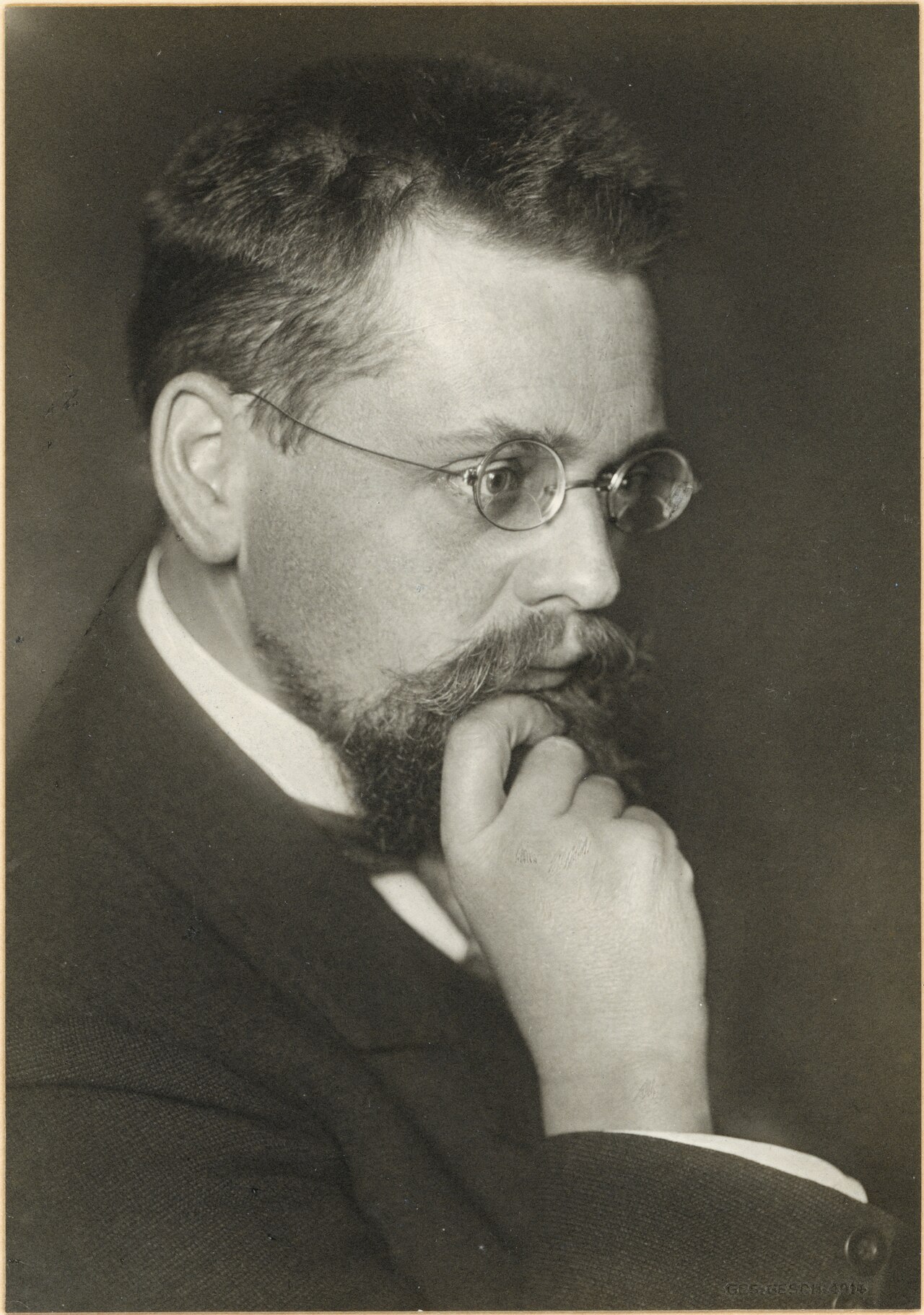
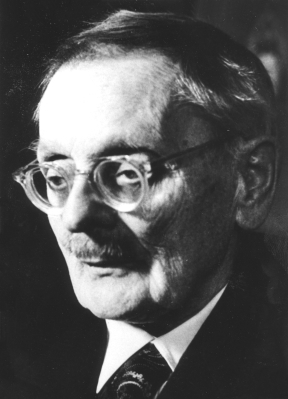
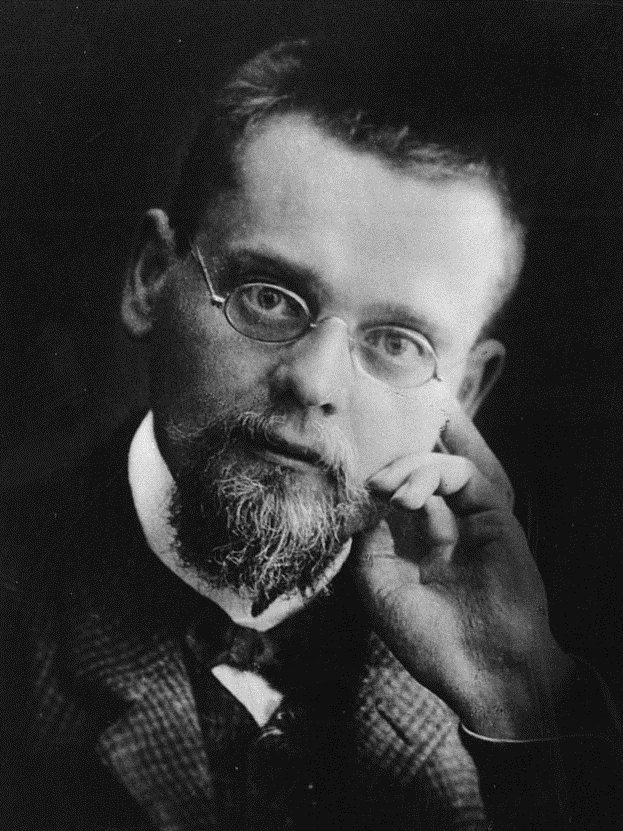
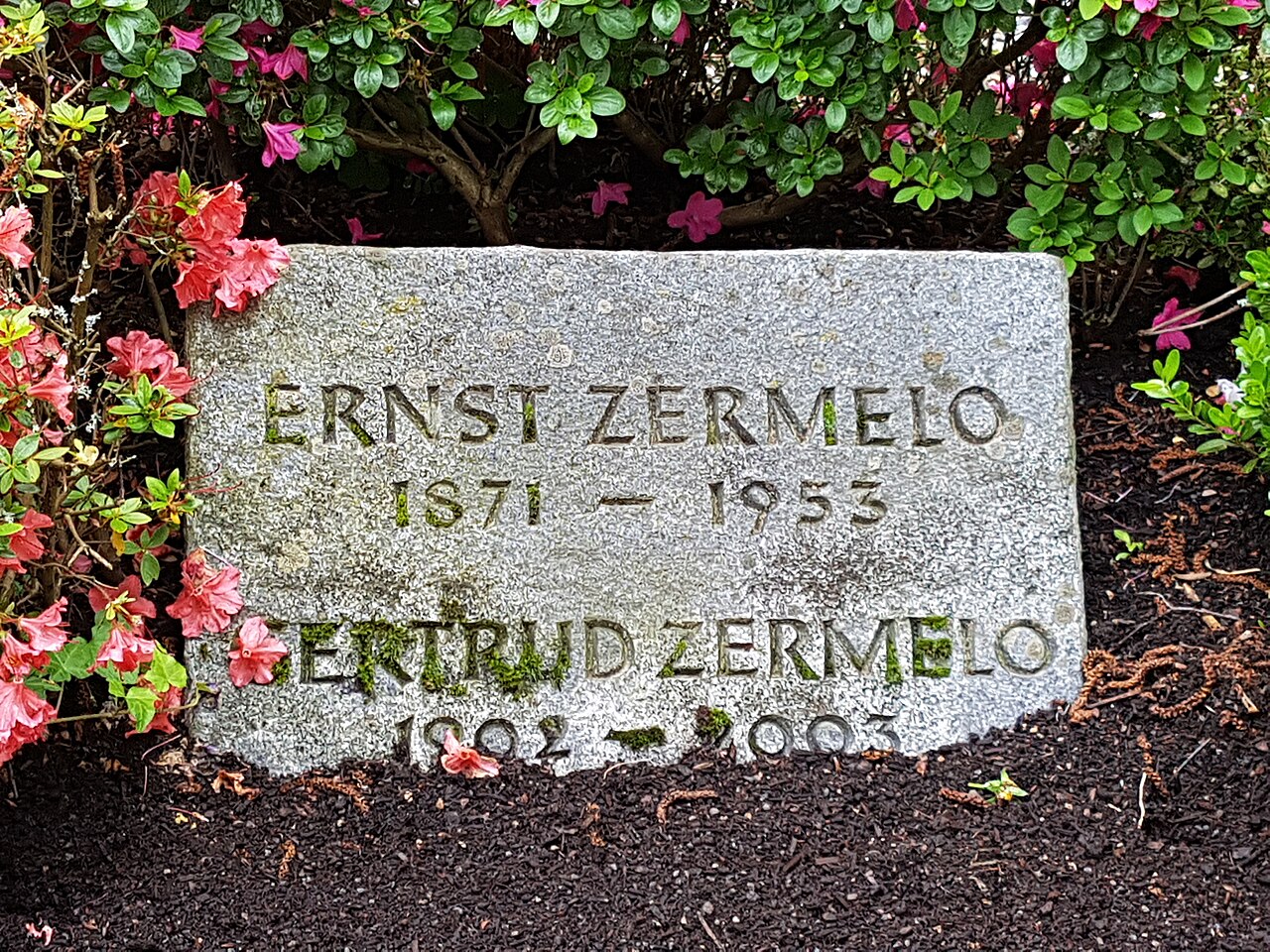
Ernst Friedrich Ferdinand Zermelo (27 July 1871 – 21 May 1953) was a German logician and mathematician, whose work has major implications for the foundations of mathematics. He is known for his role in developing Zermelo–Fraenkel axiomatic set theory and his proof of the well-ordering theorem. Furthermore, his 1929 work on ranking chess players is the first description of a model for pairwise comparison that continues to have a profound impact on various applied fields utilizing this method.
- known_for
- Zermelo–Fraenkel axiomatic set theory, proof of the well-ordering theorem, early
Verified Timeline
Lore & Background
Ernst Zermelo graduated from Berlin's Luisenstädtisches Gymnasium in 1889. He then studied mathematics, physics and philosophy at the University of Berlin, the University of Halle, and the University of Freiburg. He finished his doctorate in 1894 at the University of Berlin, awarded for a dissertation on the calculus of variations. Zermelo remained at the University of Berlin, where he was appointed assistant to Planck, under whose guidance he began to study hydrodynamics. In 1897, Zermelo went to the University of Göttingen, where he completed his habilitation thesis in 1899. In 1910, Zermelo left Göttingen upon being appointed to the chair of mathematics at the University of Zurich, which he resigned in 1916. He was appointed to an honorary chair at the University of Freiburg in 1926, which he resigned in 1935 because he disapproved of Adolf Hitler's regime. At the end of World War II and at his request, Zermelo was reinstated to his honorary position in Freiburg.
Reader's Guide
Zermelo's significance lies in his foundational contributions to set theory and applied mathematics. In 1904, he proved the well-ordering theorem (every set can be well ordered), a step toward Hilbert's first problem, the continuum hypothesis. His proof, based on the powerset axiom and the axiom of choice, was not accepted by all mathematicians, mostly because the axiom of choice was a paradigm of non-constructive mathematics. In 1908, Zermelo succeeded in producing an improved proof making use of Dedekind's notion of the 'chain' of a set, which became more widely accepted; that same year he also offered an axiomatization of set theory. In 1922, Abraham Fraenkel and Thoralf Skolem independently expanded Zermelo's axiom system, adding the axioms of replacement and regularity, resulting in the Zermelo–Fraenkel axioms (ZF), now the most commonly used system for axiomatic set theory. His 1929 work on ranking chess players is the first description of a model for pairwise comparison. Additionally, his 1931 formulation of Zermelo's navigation problem is a classic optimal control problem, dealing with a boat navigating from a point O to a destination point D in the least possible time, considering current and wind.
Did You Know?
- Zermelo discovered the so-called Russell paradox, as evidenced by Husserl's Nachlass.
- He was appointed assistant to Planck at the University of Berlin, under whose guidance he began to study hydrodynamics.
- Zermelo resigned his honorary chair at the University of Freiburg in 1935 because he disapproved of Adolf Hitler's regime.
- His 1929 work on ranking chess players is the first description of a model for pairwise comparison.
- Zermelo's navigation problem, proposed in 1931, is a classic optimal control problem about a boat navigating to a destination in the least possible time.
Academic Odyssey and Moral Conviction
Ernst Zermelo's academic path carried him through several of Europe's most prestigious institutions. After graduating from Berlin's Luisenstädtisches Gymnasium in 1889, he pursued mathematics, physics, and philosophy across the Universities of Berlin, Halle, and Freiburg. His 1894 doctorate at Berlin focused on the calculus of variations, and he then served as an assistant to Max Planck, studying hydrodynamics under the physicist's guidance. In 1897 he moved to Göttingen, then the world's leading center for mathematical research, where he completed his habilitation in 1899. His career continued with a chair at the University of Zurich from 1910 to 1916 and an honorary position at Freiburg beginning in 1926. Yet it was his decision to resign from Freiburg in 1935, driven by his disapproval of Hitler's regime, that revealed the moral backbone behind his intellect. After World War II ended, at his own request, he was reinstated to his honorary chair in Freiburg, where he remained until his death in 1953.
Taming the Infinite: The Well-Ordering Theorem and Axiomatization
When David Hilbert presented his famous list of 23 problems at the 1900 Paris congress, the first question concerned the continuum hypothesis and implicitly called for a proof of the well-ordering theorem. Zermelo, working under Hilbert's influence, had already published on transfinite cardinal addition by 1902 and had independently encountered what would become known as Russell's paradox. In 1904 he delivered the breakthrough: a proof that every set can be well-ordered, relying on the powerset axiom and the axiom of choice. The result earned him a professorship at Göttingen in 1905, yet the axiom of choice's non-constructive character left many mathematicians uneasy. Zermelo responded in 1908 with a refined proof using Dedekind's notion of a chain, and in that same year he published his landmark axiomatization of set theory. Although he could not yet demonstrate the consistency of his axioms, the framework he laid down became the foundation upon which Fraenkel and Skolem would later build the Zermelo–Fraenkel system, now the standard language of axiomatic set theory.
Beyond Pure Logic: Chess, Navigation, and Applied Mathematics
Zermelo's influence extended well beyond the abstract realm of set theory. In 1929 he published a paper applying set-theoretic reasoning to the game of chess, proposing a model for ranking players based on pairwise comparisons. This was the first formal description of what would become a widely used method in applied fields ranging from sports analytics to decision science. His 1931 navigation problem offered another striking example of his applied thinking: given a boat traveling from origin O to destination D with a fixed maximum speed, what control strategy minimizes travel time? Without external forces the answer is trivially a straight line, but once current and wind are factored in, the optimal path becomes a genuine optimal control problem. These contributions, alongside his earlier work on the calculus of variations and hydrodynamics under Planck, show a mathematician who consistently sought to connect rigorous formalism with concrete, real-world questions. His collected works, published in two volumes by Springer in 2013, span both set theory and applied mathematics, reflecting this dual commitment.
Enduring Legacy and the Architecture of Modern Mathematics
The Zermelo–Fraenkel axioms, expanded in 1922 by Abraham Fraenkel and Thoralf Skolem with the axioms of replacement and regularity, now constitute the most commonly used formal system for axiomatic set theory. This means that virtually every contemporary proof in pure mathematics is silently built on the foundations Zermelo first articulated in 1908. His axiom of choice, once a source of fierce controversy, has become a standard assumption across much of modern mathematics. The breadth of his legacy is further marked by the asteroid 14990 Zermelo, named in his honor, and by the two-volume collected works edited by Ebbinghaus, Fraser, and Kanamori, which bring his set-theoretic, variational, and applied writings together for a new generation. Gregory Moore's 1982 monograph tracing the axiom of choice's origins and influence testifies to the continuing scholarly fascination with Zermelo's ideas. From the Paris conference of 1900 to the present day, his name remains inseparable from the question of what mathematics can and should assume.
Gallery
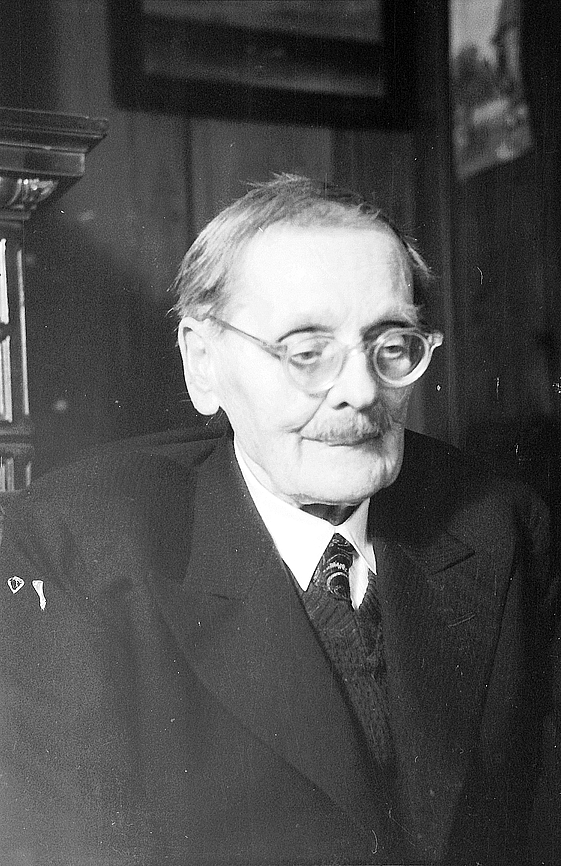
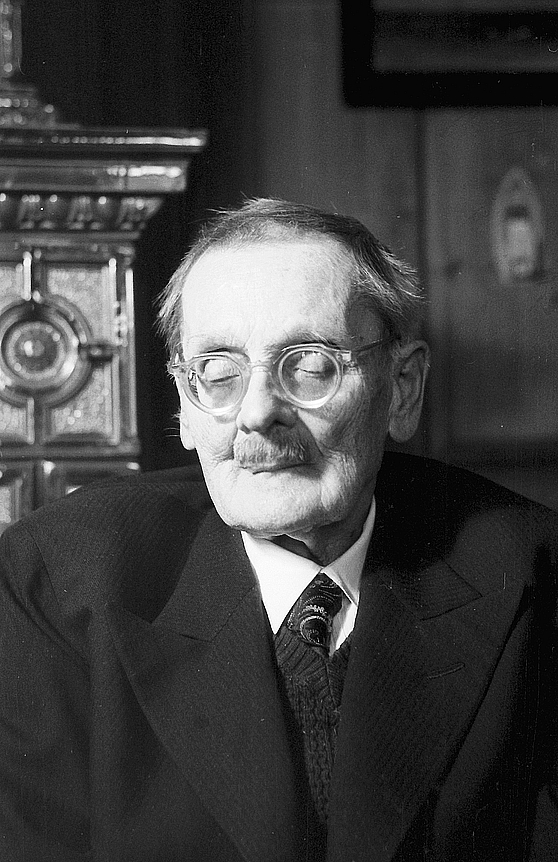
Frequently Asked Questions
Who is Ernst Zermelo?
Ernst Zermelo was a German logician and mathematician (1871–1953) whose career was devoted to making the foundations of mathematics rigorous and paradox-free. He is best remembered for transforming set theory into a clean axiomatic system that still anchors modern logic and mathematics today.
What is the Zermelo–Fraenkel system?
It is the standard set of axioms that defines how mathematical 'sets' behave, first sketched by Zermelo in 1908 and later expanded by Abraham Fraenkel. In plain terms, it gives logicians a precise rulebook for reasoning about collections of objects while avoiding contradictions like Russell's paradox.
What is the well-ordering theorem and why was Zermelo's proof controversial?
The theorem asserts that any set can be lined up so that every element has a definite rank, a property called well-ordering. Zermelo's 1904 proof depended on the axiom of choice, and that reliance ignited decades of heated debate about whether the axiom is a legitimate building block for mathematics.
Did Zermelo contribute to anything outside pure logic?
Yes—in 1929 he published a method for ranking chess players using only their head-to-head match results, one of the earliest formal pairwise-comparison models. That idea is a direct ancestor of modern rating systems used in competitive sports and gaming.
Why do modern mathematicians still rely on Zermelo's work?
Because the axioms he proposed in 1908 remain the default starting point for virtually all contemporary set theory, cardinal arithmetic, and consistency proofs. Anyone working with infinite sets or the logical structure of mathematics is, in a very real sense, building on the framework Zermelo laid down.
More in Mathematicians 1-24
Elsewhere in the Mathematicians universe
Spotted an error? Know more?
This is a living reference — every entry is fact-audited, and reader corrections feed straight into our audit queue. Suggest an edit · See this site's audit record